When FCC Commissioner Brendan Carr’s nomination was confirmed by the U.S. Senate in 2018, his first words were not, “Take me to Ruleville.”
But that’s exactly what happened.
U.S. Senator Roger Wicker knew there was something in Ruleville Carr needed to see.
Carr was soon introduced to a connective health pilot program that was being conducted by the University of Mississippi Medical Center, in partnership with North Sunflower Medical Center.
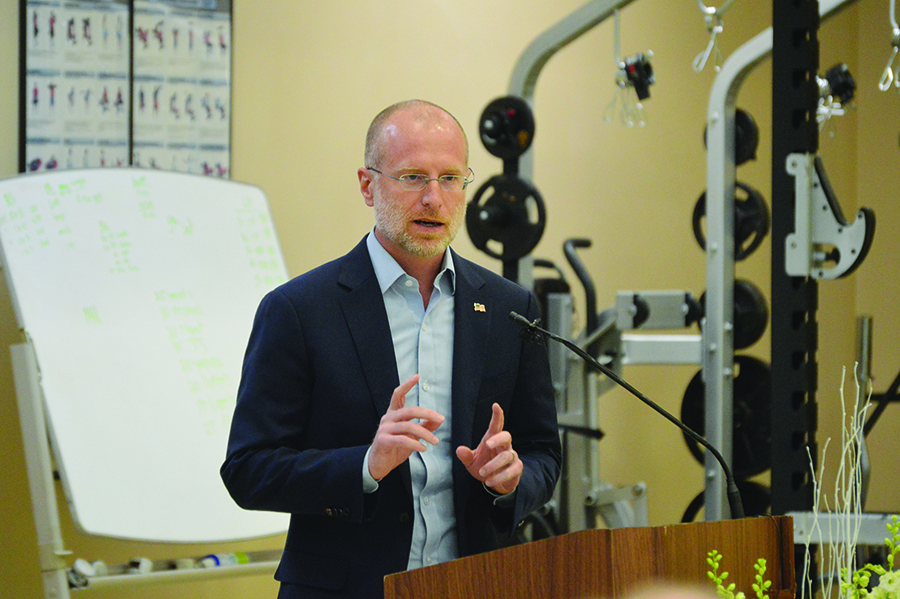 FCC Commissioner Brendan Carr
Patients like Beulah native Annie Ford - a diabetic who struggled to get her numbers right until she entered the pilot program - were sent home with state-of-the-art technology like iPads and Bluetooth connected blood glucose monitors.
“What makes it special is that we have nurses manning this data coming in, and we communicate that with the doctor, with the social worker, and a dietician,” said Cindy Broom, coordinator for remote patient monitoring at the University of Mississippi Medical Center.
It seemed to be the missing piece of the telehealth puzzle, and Carr’s brief meeting with Ford three years ago opened his eyes and the nation to a new way of doing health care.
The Ruleville model is not only spreading to other states, it has become an important component to the health care industry’s response to COVID-19, Carr said.
“The story that (Ford) told me, her story, is a spark that has gone from here in Ruleville to nationwide, and it has helped this country and our health care heroes respond to the COVID-19 pandemic,” Carr said. “Before I came here to Ruleville, the FCC had supported internet connections to brick and mortar hospitals, and that’s great, but the idea that came from Mrs. Annie is why don’t we make sure the people have the connections to telehealth when they are at home or anywhere else, and that is the key,” Carr said. “That is the future of health care in this country.”
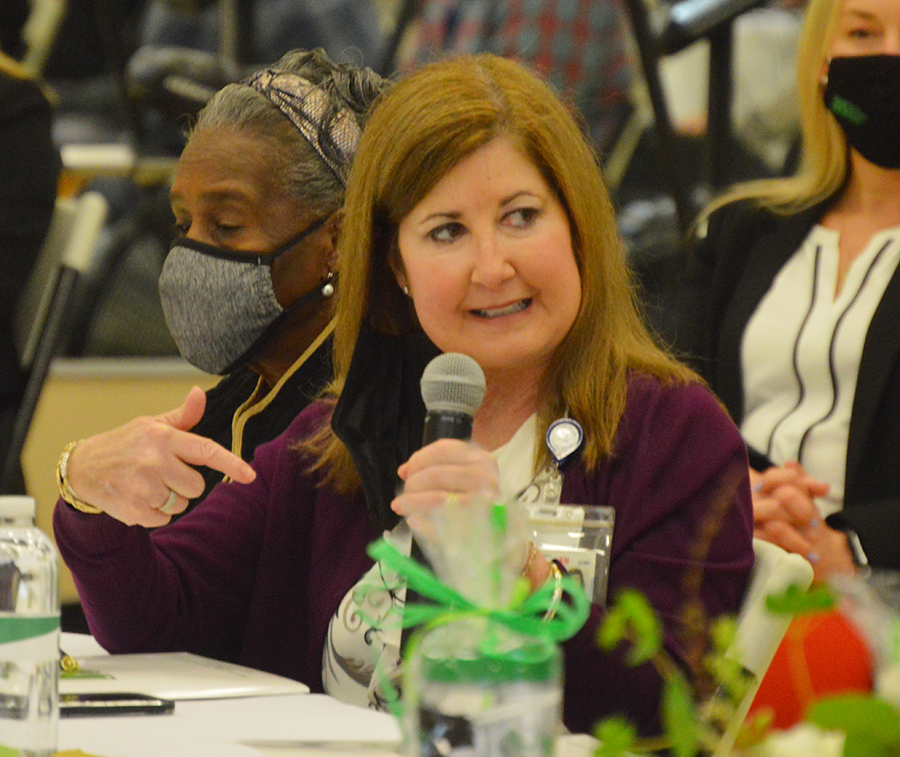 Cindy Broom, Coordinator for Remote Patient Monitoring at UMMC.
Carr went to work three years ago to make sure this model was replicated nationwide, and it just so happened that major headway was being made right around the time COVID-19 hit the country over a year ago.
“As a matter of luck, when COVID hit this country last May, we were just at the point in our rule making process where we were ready to go,” Carr said. “So the two came together.”
Through CARES Act funding, Carr said Congress was able to set up an emergency broad COVID-19 program that replicated the connective care model at NSMC.
It is now being implemented in at least eight other states, Carr said.
“It has had life-changing results in communities across this country,” he said.
Carr said now that this has become the model for telehealth, the major issue is connectivity.
There are still millions of Americans in rural communities who do not have a stable internet connection.
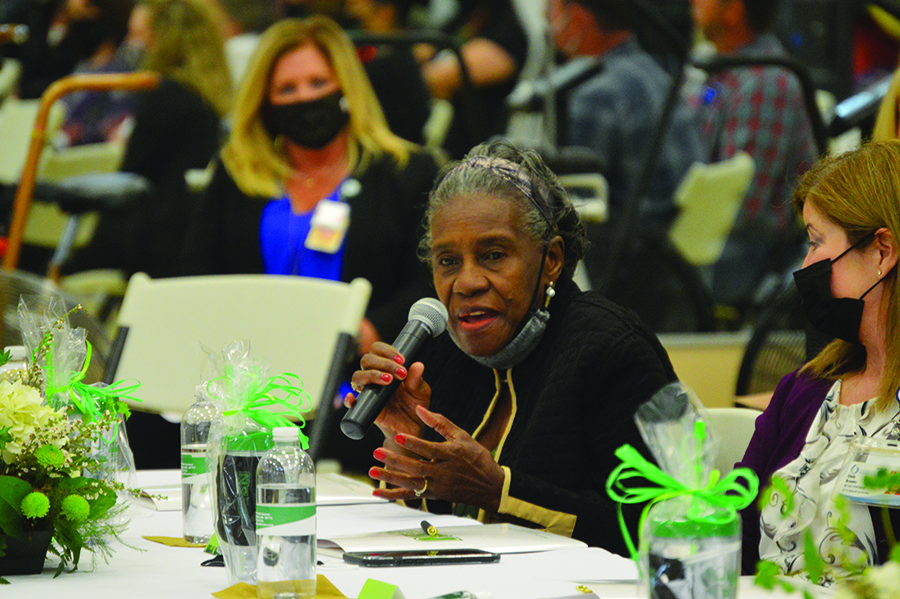 Beulah native Annie Ford gives her testimony as a patient in the NSMC-UMMC pilot program.
“We need to be connected to the outside world, just as anybody in New York City or Los Angeles can be,” Wicker said during the visit to NSMC last week. Carr said over $500 million is now being deployed to connect over 220,000 homes and businesses across the country that have not had stable internet in the past.
“With the capability of what we can do with more connectivity, more involvement with our rural communities, we will do exactly what we did with Mrs. Annie,” Carr said.
Broom told The E-T after the program that more money has been allotted to Mississippi that will allow UMMC to continue expanding these services.
Little did she know, however, that what was started three years ago would expand so rapidly and would become a major part of keeping people healthy during the pandemic.
“Never in my wildest dreams,” Broom said.
Carr, admittedly didn’t know how important it would become so quickly, but he’s happy he made that trip to Ruleville and got started on implementing the model nationwide when he did.
“The future is very bright when it comes to connective care, and I think the world needs to know that the spark of it was lit right here in Ruleville,” Carr said.