Wade Litton says that when he and other Delta Council leaders began to brainstorm with health-care experts on how to address the hospital crisis in the region, they had no preconceived notions of what a possible solution might be.
“We followed the facts, we did the research, and it’s led us down this road,” said Litton, the CEO of implement dealer Wade Inc. and chairman of the board for the 19-county economic development organization.
“This road” is a proposal to create the Delta Regional Health Authority, a body that would take over operational control of any community hospital in the Delta that wanted to be part of a multi-hospital collaboration rather than continuing to go it alone.
Click on Title To Read Document
Legislation to create the authority was introduced this past week in the Mississippi House and Senate.
On Thursday, Litton and some of the others who put the proposal together participated in a videoconference to explain the plan and address some of the concerns that have been raised about it.
The proposal, which has been 16 months in the works, is designed to address the rural hospital crisis that has been particularly acute in the Delta.
Greenwood Leflore Hospital’s precarious financial condition, which has required an infusion of about $11 million in local public funding to keep its doors open for the past year, has been the most highlighted, but several other Delta hospitals have struggled with the same issues: declining patient volumes, heavy loads of uncompensated or undercompensated care, difficulties in recruiting doctors and other skilled medical personnel, and spiraling costs that resulted from the COVID-19 pandemic.
“We were at the point where we were living payroll to payroll at several hospitals, not just Greenwood,” said Dick Cowart, a Nashville attorney who is considered one of the nation’s top experts on health-care law.
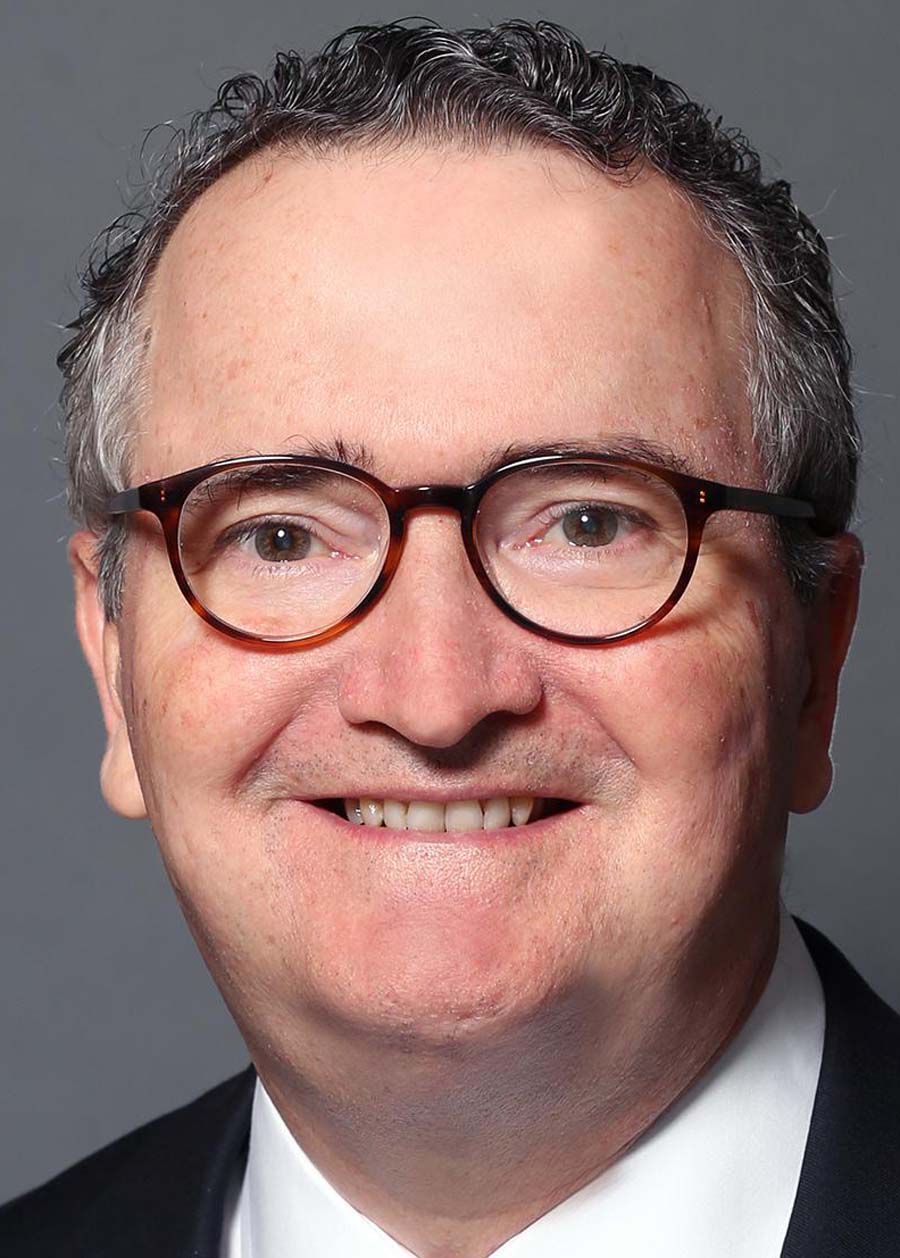 Dick Cowart
A recent change in Mississippi’s Medicaid program, which is projected to produce hundreds of millions of dollars a year for the state’s hospitals, has provided immediate relief. It does not preclude, however, the necessity of taking a regional approach that would allow currently independent hospitals to join forces as a way to lower costs and enhance medical services, Cowart said.
“You can’t buy a medical records system that talks among five hospitals if five hospitals buy five different medical records systems,” he said. “If six counties need to share a cardiologist, how do six hospitals recruit one cardiologist?”
The legislation, if adopted, would create the Delta Regional Health Authority, which would be governed initially by a five-member board. Three of the members would be appointed by the governor, and two of those would have to reside in the Delta. The other two would be appointed by the lieutenant governor, and one of those would have to reside in the Delta.
Up to six additional members could be added to the board from the hospitals that decide, with their owners’ concurrence, to join the authority.
The area covered by the authority includes all of the counties that are part of Delta Council except for DeSoto County, which has evolved into a Memphis suburb. There are a dozen county- or city-owned hospitals in the prescribed area, although some of them would have to end their leases with private operators in order to join the authority.
Cowart expects that it would take several years for the authority to reach its critical mass. “It will not be a big bang event where 12 do it at one time or eight do it at one time, but I do think you’ll have two or three cornerstones who see the merit in it.”
Hospitals that join the authority would still be owned by their local governments, but they would be turning over most of the control to the authority’s board and the day-to-day management to the chief executive officer that board hires. The CEO would have the power to hire and fire, and the authority would determine what medical services are offered where.
The hospitals would continue to have their own boards as well, but their powers would be much more limited and largely determined by the regional authority’s board.
Cowart said there are pluses, however, for counties and cities to relinquish most of the control of the hospitals they own. “With local control goes local responsibility, particularly fiscal responsibility.”
In addition, the state would become a partner in the endeavor, including the prospect of additional funding.
Delta Council is asking the state to put up $10 million to get the regional authority off the ground plus another
$10 million a year in enhanced Medicaid funding for operations. Leveraged with a 3-to-1 federal match, the $40 million could be used by the authority to “buy a new medical records system, recruit the specialists, do the deferred maintenance on the facilities, all the things that have not been done,” said Cowart.
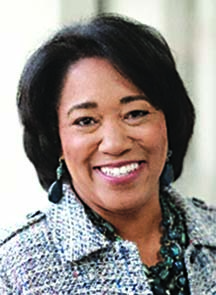 Paula Autry
Paula Autry, a health-care consultant from Michigan who worked on the proposal, said the state’s investment in creating a regional health authority for the Delta could make up for some of the past neglect. “The Delta is not starting from an equal place as every other place, even in the state of Mississippi,” she said. “And so for it to get to the point that it’s even on an equal playing field, there has to be an investment of capital and resources and doing that collaboratively.”
Regional health-care organizations have been successfully implemented in other parts of the country, according to Cowart, including in West Tennessee, North Alabama and South Georgia.
What would be unique about the Delta collaboration is that it would not follow the “hub and spoke” model, in which the specialists are concentrated in one major medical facility, and the other hospital members feed their patients to it.
“That’s not going to happen in the Delta,” Cowart said. “There is no singular city that’s the socioeconomic hub.”
Instead, the authority would establish “Centers of Excellence,” where the specialists would be concentrated. For example, one hospital might be a Center of Excellence for cardiology, another for urology and maybe another for neonatal intensive care. Physicians in each community would direct their patients to whichever Center of Excellence is appropriate for their medical condition, but the referring physician would also remain a part of the patient’s ongoing care.
Although local communities would like to have a full array of specialists at the hospital closest to them, that’s not a financially realistic option, said Cowart, using neonatal intensive care units as an example. “The Delta can support one, but it can’t support three,” he said.
Hospitals joining the authority would be expected to enter into a long-term contract of probably 10 to 20 years, Cowart said. “This does not need to be a window-shopping experience. This needs to be a commitment, and it needs to give it long enough to see if it’s a significant improvement. But there will also be a back door built into the process, so it will not necessarily be irreversible either.”
When the proposal’s general outlines were presented a couple of weeks ago to members of the Legislature, they drew an immediate negative reaction from several Black Delta lawmakers. The Democratic legislators complained that they were not involved in the discussions during the formulation of the proposal, and they sounded particularly suspicious of giving Gov. Tate Reeves, a Republican, a majority of the authority board’s initial appointments.
“There was no disrespect intended to anyone,” said Cowart. He said the group that worked on the proposal concentrated their interviews on hospital administrators, board members and physicians.
There has been, though, a heavy GOP influence so far on the process.
Lt. Gov. Delbert Hosemann, a Republican, expressed interest in pushing the regionalization concept after hearing a presentation last summer by Cowart at Delta Council’s annual meeting. The sponsors of the legislation in each chamber are Republican committee chairmen — Rep. Sam Creekmore IV of New Albany and Sen. David Parker of Olive Branch.
When asked whether any Delta lawmakers are supporting the proposal, Litton responded, “We’re not far enough down that road, we don’t believe.”
Sen. David Jordan, D-Greenwood, said on Friday that he had not seen the legislation and was only vaguely familiar with what was being proposed. He said he would “have an open mind to it,” but his attention presently is focused on Medicaid expansion, which has gained traction in the Legislature this year after more than a decade of Republican resistance.
“If (the Delta Regional Health Authority) can be an add-on, OK, but I don’t want it to be the only alternative we have in saving our hospital,” Jordan said.
In addition to creating an authority in the Delta, the legislation provides for establishing health authorities in each of the state’s other three congressional districts. Cowart said the Delta would serve as a pilot and could show the concept is sound and applicable elsewhere. “This is a way to address rural health care in Mississippi, not just Delta health care.”
- Contact Tim Kalich at 662-581-7243 or tkalich@gwcommonwealth.com.







